Graduates
Graduates of the bachelor’s program Water Resource Management find employment opportunities in the following sectors and institutions:
- Nature conservation (e.g., river restoration, wetland management)
- Environmental protection (e.g., flood risk management, water quality protection)
- Sustainable tourism (e.g., water based tourism, post mining landscape development)
- Development cooperation (e.g., water supply and sanitation challenges, sustainable water resource use)
- Policy consulting, consulting, and regional/landscape planning with a water related focus
- Urban water management and industrial water management
- Public administration (authorities with water related responsibilities, e.g., municipal utilities, environmental agencies)
Alternatively, a wide range of master’s programs in Germany and abroad offer opportunities for further qualification and specialization.
Graduates who entered the workforce directly after completing the bachelor’s program have taken on roles in:
- Flood‑risk management
- Expansion of renewable energy systems
- Construction and operation of wastewater treatment facilities
- Engineering consultancies
- Municipal utilities
Employers particularly value the interdisciplinary training of graduates, which enables them to address sustainable water resource management across disciplinary boundaries. The program’s strong practical orientation and close cooperation with water‑sector professionals ensure a labor‑market‑oriented, hands‑on education aligned with current research.
Graduate Profiles
Career profiles of female graduates – Interview with Rebecca Orschler
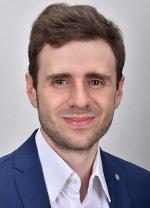
My name is Björn Loos. From 2014 to 2018, I studied Water Resource Management at the University of Applied Forest Sciences in Rottenburg. At the beginning, I was unsure whether I had chosen the right program, but the broad and interdisciplinary content quickly convinced me, and I am glad I stayed.
After completing my bachelor’s degree, I began a master’s program in Environmental Protection at Nürtingen-Geislingen University (HfWU), specializing in urban water management and industrial wastewater treatment. The program is a cooperation between HfWU, Reutlingen University, Esslingen University, and Stuttgart University of Applied Sciences.
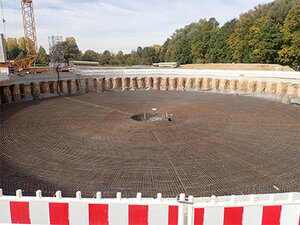
During my studies, I completed several internships to find out which professional field suited me best. In the end, things turned out differently than expected: due to the COVID 19 pandemic in 2020, my master’s graduation and job search were challenging, and I eventually joined the Ludwigsburg District Office in the field of municipal wastewater and water bodies.
Looking back, this was the right decision. The work is diverse and far from boring. My colleague and I oversee 28 wastewater treatment plants and 380 stormwater overflow structures. Exciting projects include new housing developments, treatment plant expansions, and the construction of advanced micropollutant removal systems. Through this broad range of tasks, I came into contact with many other fields and eventually found a new role: since mid 2023, I have been the operations manager of Tübingen’s municipal wastewater services and look forward to the new challenge.
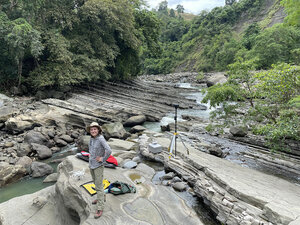
I’m Vanessa, and I completed my bachelor’s degree in Water Resource Management in Rottenburg from 2016 to 2020. During my six month practical semester, I gained valuable experience at the Regional Council in Tübingen. I was particularly interested in geoinformatics, which led me to pursue a master’s degree in Physical Geography in Tübingen, focusing on GIS and remote sensing.
Throughout both degrees, I became increasingly fascinated by the use of drones in water related applications. During my master’s studies, I worked as an intern and student assistant at I AM HYDRO GmbH, a company specializing in drone based surveying and monitoring of water bodies.
After completing my master’s degree, I was hired permanently at I AM HYDRO. I now work in fish monitoring, river surveying, and consulting. I especially enjoy the variety of the job: we regularly work outdoors, surveying rivers or installing and maintaining camera systems for fish monitoring. We also have international projects—one highlight was spending three weeks in Indonesia to survey a river.
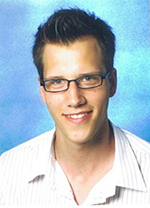
My name is Matthias Engelfried, and I was part of the first cohort of the Water Resource Management program, starting in the winter semester of 2013. Afterward, I pursued a master’s degree in Civil Engineering at Karlsruhe University of Applied Sciences, specializing in water management. In addition to courses in construction management, construction law, and mathematics, the engineering fundamentals from the bachelor’s program—such as hydraulics, numerical flow modeling, hydro infrastructure, and urban water management—were deepened.
Alongside my master’s studies, I gained practical experience at RBS wave GmbH in the consulting department, first as an intern and later as a student assistant. I am now employed there as a project manager in the network management team. Our work includes analysis, condition assessment, asset preservation, safety, and optimization of existing networks and facilities, as well as the development of customized solutions. I work on these topics through pipeline network analyses and calculations using the STANET software for both public water suppliers and industrial clients.
Through the team’s close cooperation with students during internships and thesis projects, I still regularly meet “Rottenburg water managers” in my daily work.