The Renewable Energies degree programme combines the teaching of in-depth technical and economic knowledge and social skills with practical implementation. Students on this degree programme benefit from a practical semester and educational trips and excursions in Germany and abroad, which serve as preparation for later work in this important industry – so that students of renewable energies can point us towards a sustainable and clean future.
If you study renewable energies, you are choosing a degree programme with a future!
Mitigating climate change is the greatest challenge of the present and certainly also of the future. It is not without reason that demands from society and politicians for far-reaching changes are becoming ever louder. The consequences of climate change are already being felt – and there is no end in sight.
Its ecological, economic and political consequences will also directly jeopardise our livelihoods in the near future. This is a danger that is still underestimated and far too often ignored. A drastic reduction in the use of fossil fuels within the next few years is therefore essential.
This transition can only be achieved through a massive increase in energy efficiency and by covering the remaining energy demand with renewable energy sources such as sun, wind, water and biomass. This will also bring major economic benefits. On the one hand, the prices of fossil fuels will rise significantly in the medium term due to their increasing scarcity. On the other hand, the use of locally generated renewable energies increases regional value creation.
The dynamic development and progressive system integration of renewable energies into a climate-friendly energy supply and reliable energy utilisation is becoming increasingly important and is increasingly becoming the focus of the energy industry in Germany. The expansion of renewable energies and the system change from nuclear power and coal to an increasingly decentralised generation of electricity and heat from renewable energy sources entails numerous tasks. Electricity grids must be modernised and expanded, surplus energy must be stored and the energy required must be used much more efficiently.
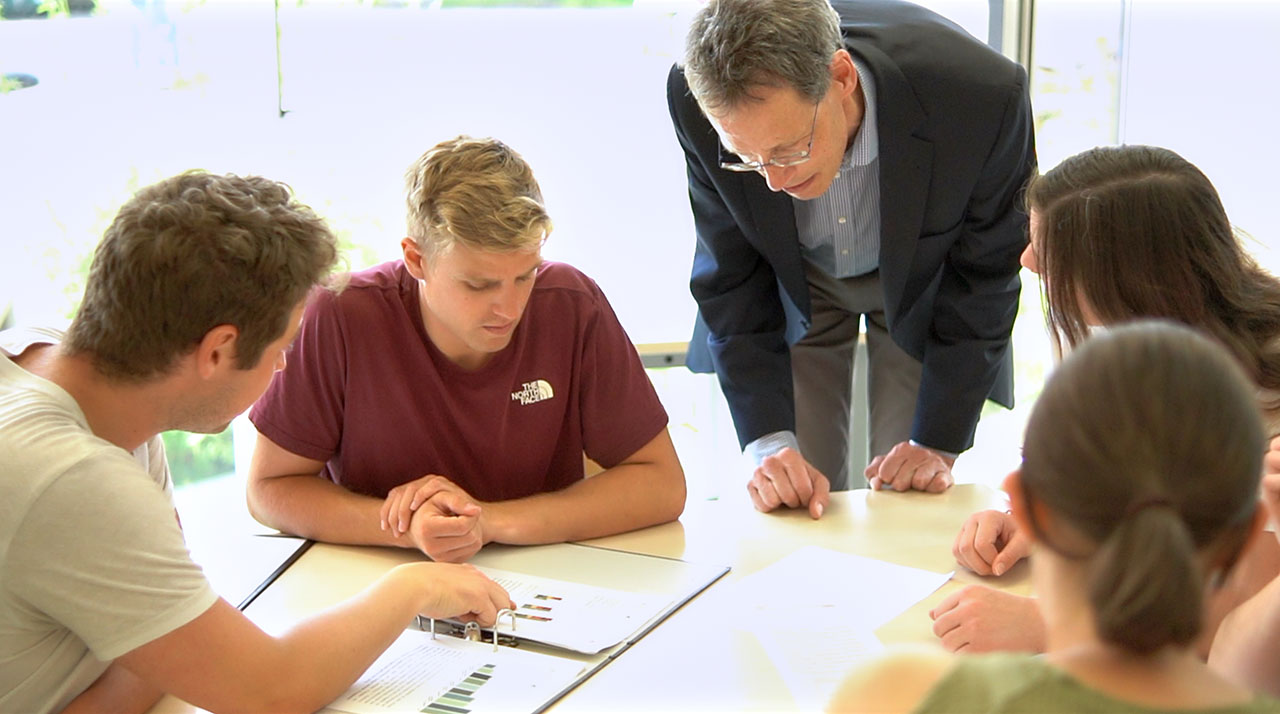
Together, we develop solutions to achieve these ambitious goals. The combination of theoretical knowledge and targeted practical training enables students to work both independently and collaboratively with lecturers. This approach supports the transition to sustainable energy systems and contributes to addressing climate change.
You are interested in the topic of energy? You want to actively help shape the energy transition? You would like to develop solutions for one of the greatest challenges of our time?
Admission Requirements
General or subject specific higher education entrance qualification, university of applied sciences entrance qualification, or professional qualification
Standard Period of Study
7 semesters / 210 ECTS / practical semester in the 5th semester
Start of Studies
Winter semester and summer semester
Application Deadlines
5 July / 15 January
Degree
Bachelor of Science (B.Sc.)
Type of Study
Full time – individual part time study possible
Language of Instruction
German
Studying Abroad
Semester abroad at optional partner and host universities possible
Practical Training
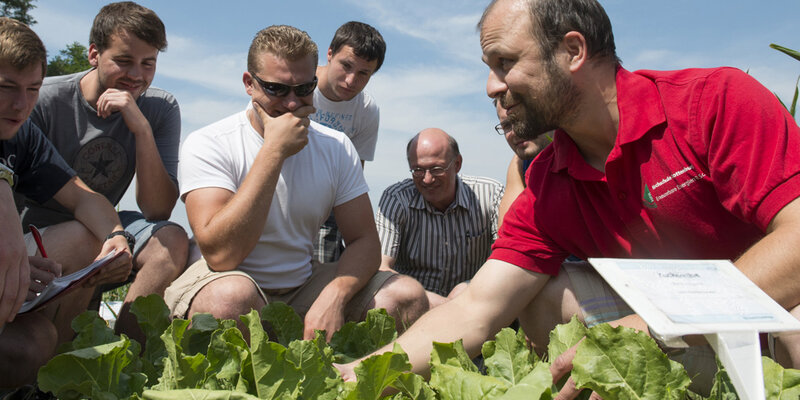
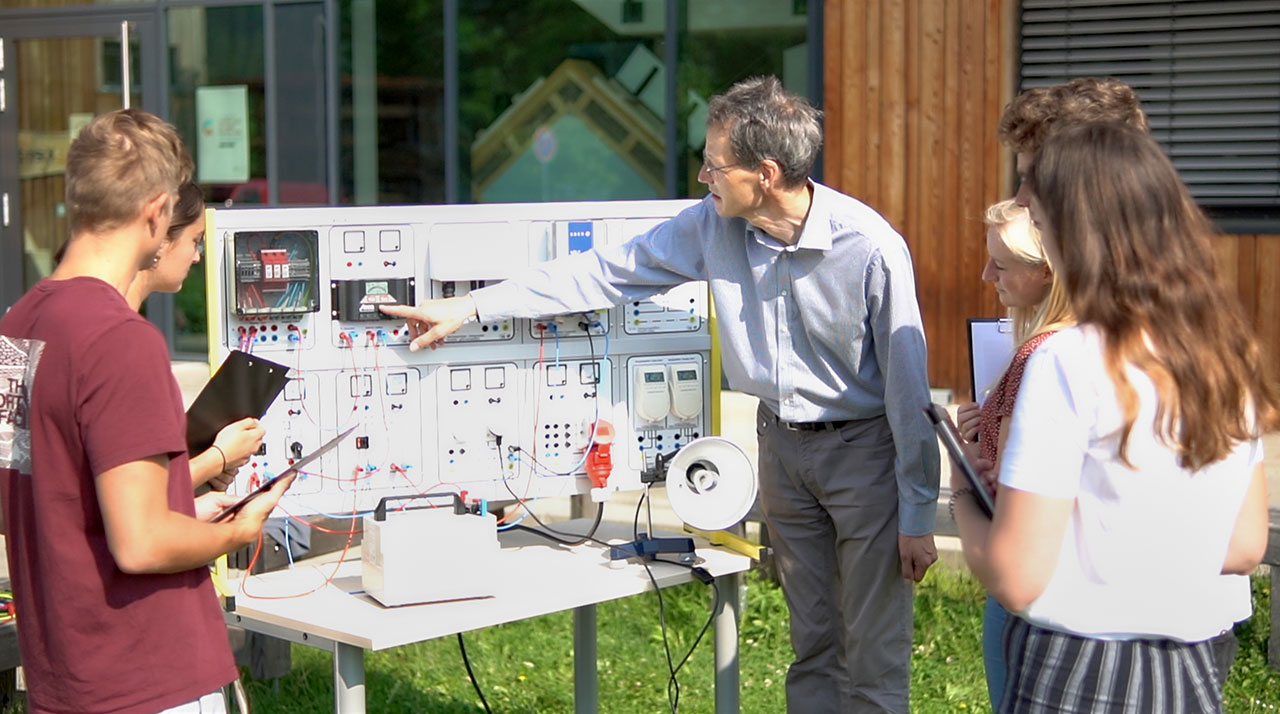
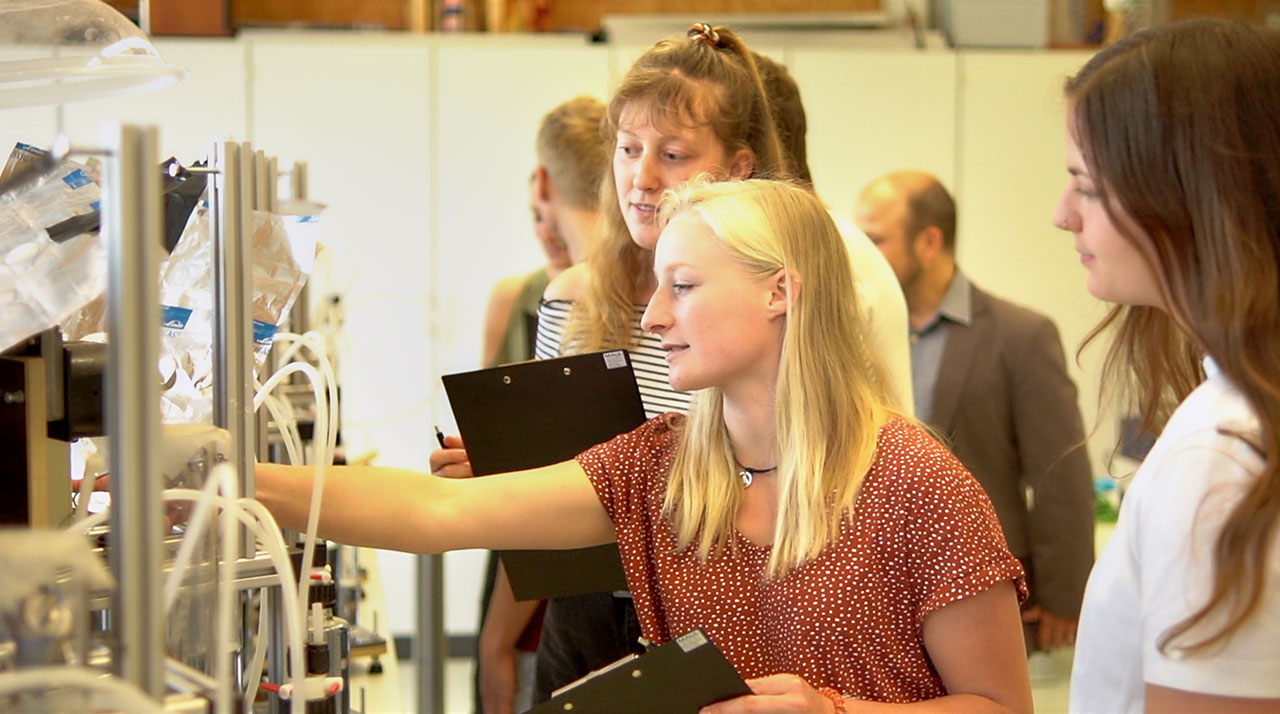
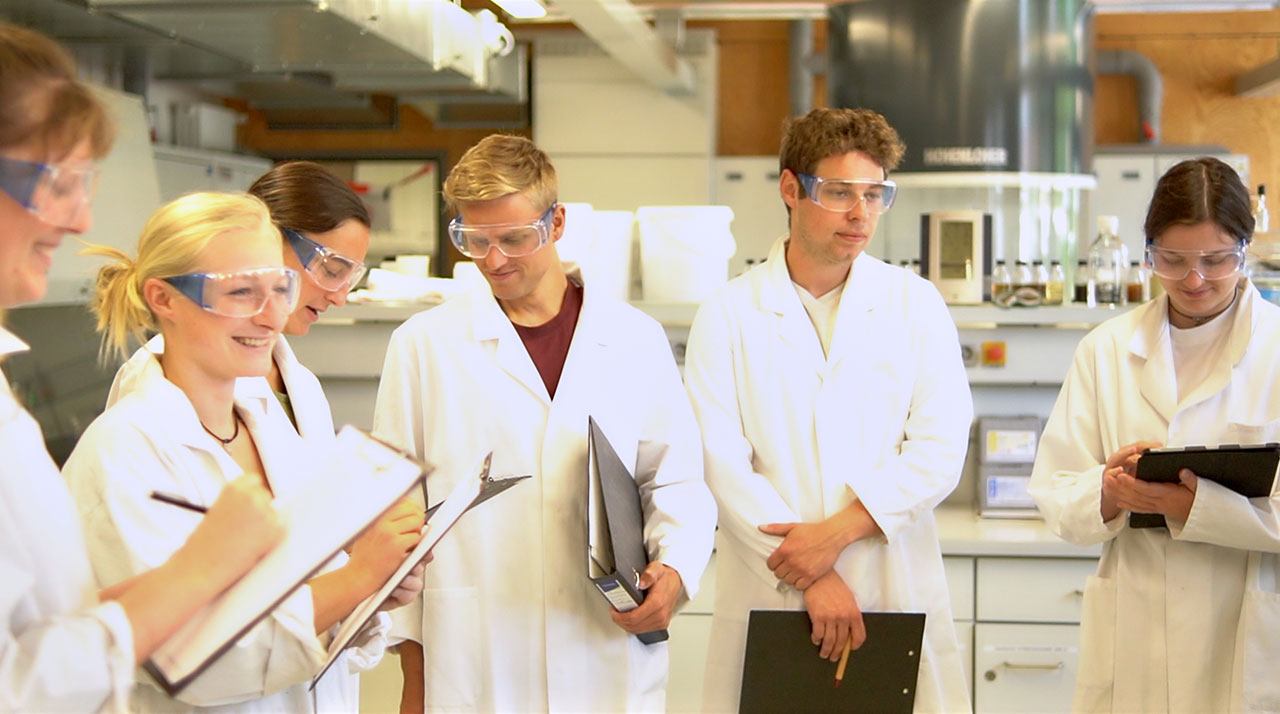
A high level of practical relevance is ensured through the integrated practical semester, numerous field trips and excursions in Germany and abroad, practical and methodological exercises in the field and laboratory, as well as practice oriented team and project work with partners from industry, public administration, and authorities.
Flexible Module System
In addition to compulsory modules, the main study phase offers a wide selection of elective modules for specialization and individual profile development. The elective modules can be found in the “Study Schedule” section or in the module handbook.
Special Study Models (optional)
In addition to the regular full time program, the degree program offers two alternative study models that accommodate the needs of different groups of students and allow for a flexible study plan. Within the “Studies at an Adjusted Pace” model, the Renewable Energy program can also be studied part time or alongside employment. The “Semester PLUS” model offers the opportunity to take more time for the basic study phase and make use of a variety of additional and support services. Details can be found in the “Study Schedule & Study Content” section or in the module handbook.
And afterwards?
The Renewable Energy program enables graduates to pursue a wide range of career paths. They work in a new professional field with immense development potential and can choose from a variety of areas of responsibility.
The B.Sc. Renewable Energies programme provides an innovative and distinctive university education over seven semesters. Its strong practical focus, combined with the acquisition of technical and economic knowledge as well as social skills, equips students to work successfully in the growing field of renewable energies.
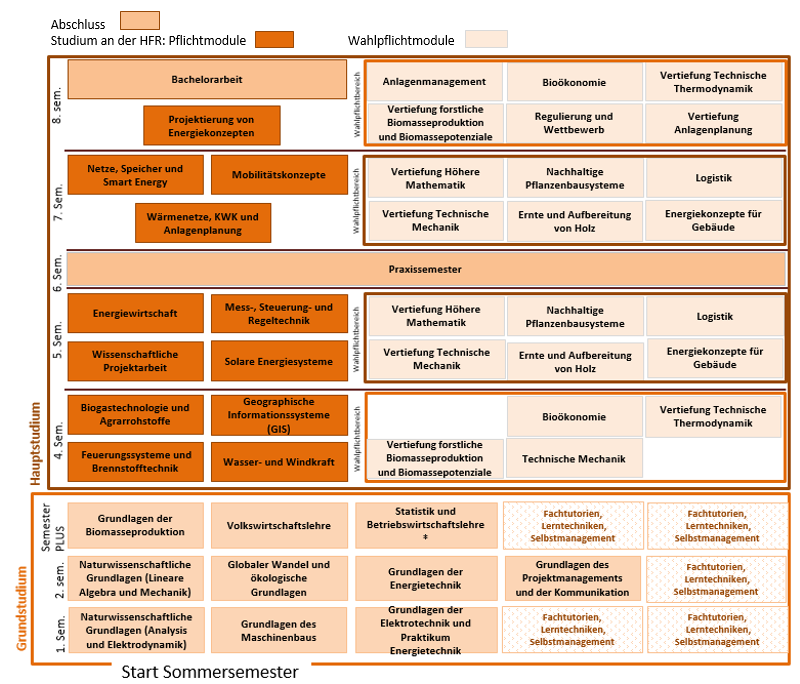
Overall, the degree programme consists of a foundation course, main course, practical semester, and the Bachelor's thesis.
In addition to starting in the winter and summer semesters, the degree programme offers students optional individual study options.
The aim is to provide a broad engineering education for specialists and managers
The 3rd semester marks the start of the main study programme (3rd to 7th semester) and thus the in-depth study of the degree programme. In the main study programme, the knowledge and skills acquired in the basic study programme are deepened, applied in advanced subjects, and consolidated through many practical exercises and a practical semester. The main study programme is divided into a compulsory part and a broad selection of compulsory elective modules for individual profile development.
The compulsory modules in the general part of the main study programme are:
Firing systems and fuel technology
Wind and hydropower
Biogas technology and agricultural raw materials
Geographical Information Systems (GIS)
Scientific project work
Solar energy systems
Energy industry
Measurement, control, and regulation technology
Heating networks, CHP, and system planning
Grids, storage, and smart energy
Mobility concepts and future scenarios
Project planning of energy concepts
The range of compulsory elective modules in the main study programme offers opportunities to specialise in the following areas:
System planning
Asset management
Energy concepts for buildings
Bioeconomy
Sustainable crop production systems
Forest biomass production and biomass potentials
Harvesting and processing wood
Logistics
Regulation and competition
Technical thermodynamics
Technical mechanics
Higher mathematics
The individual courses of the modules can be found in the module handbook of the degree programme.
Study profiles B.Sc. Renewable Energies
In addition to the compulsory modules, six compulsory elective modules are taken in the course of the main degree programme. This allows students to develop an individual study profile.
Examples of how to create a study profile are presented below. In principle, however, any combination is possible.
Example 1: Study Profile "Energy systems engineering"
moreless
Energy systems engineering
Students learn to combine their technical skills with systems thinking. On the one hand, mathematical and engineering fundamentals are strengthened to prepare students for a subsequent Master's degree in a technical field. On the other hand, using the example of energy technology in buildings, students gain practical insight into how the optimisation of building physics, systems engineering, and economic factors contributes to sustainable energy concepts. The range of fields of activity is correspondingly broad. Most graduates of the degree programme find exciting jobs in planning and engineering offices or with regional and national energy suppliers. However, the creation of energy and climate protection concepts for local authorities and ministries, as well as management consultancy and association work, are also challenging prospects. Possible certificate courses accompanying your studies, such as BAFA Building Energy Consultant, KfW Energy Efficiency Expert, or Energy Auditor, also offer successful paths to self-employment.
The following modules can be combined to create a profile:
Specialisation in technical thermodynamics
In-depth system planning
Energy concepts for buildings
Specialisation in Advanced Mathematics
Specialisation in technical mechanics
Technical mechanics
Example 2: Study profile "Bioenergy and renewable raw materials"
moreless
Bioenergy is a central pillar in the renewable energy portfolio: it can be stored, is available on a decentralised basis (including in the Global South), and makes important contributions to the circular economy through the recycling of residual materials and cascade use. A sustainable economy also requires a transformation in raw material use to fully replace fossil resources, for example, through bio-based materials, biomethane, and biorefinery technologies.
The skills to be acquired here are relevant, for example, for biomass heating (power) plants and regional energy suppliers, for the sustainable production of forestry and agricultural biomass, as an interface between the provision and utilisation of renewable raw materials, for future raw materials markets, or for international cooperation.
The compulsory elective modules match this profile:
Bioeconomy
Logistics
Regulation and competition
Asset management
Sustainable crop production systems
Harvesting and processing wood
In-depth study of forest biomass production and biomass potentials
Example 3: Study profile "Energy Management"
moreless
Energy industry
Students deepen their knowledge of the energy industry. They are able to analyse economic aspects and energy technology framework conditions and understand the entire energy supply value chain.
Numerous jobs are offered, for example, by stationary and mobile storage operators and virtual power plants, energy traders, energy producers and large-scale consumers, consulting companies, public institutions (e.g., energy agencies), and also research and development.
The profiling programme comprises the following modules:
Regulation and competition
Asset management
In-depth system planning
Specialisation in Advanced Mathematics
Bioeconomy
Pellet heating systems instead of oil, or perhaps a heat pump. The chimney sweeping trade is undergoing a transformation. At the same time, our degree programme provides students with a wealth of knowledge and skills that chimney sweeps also require. We have therefore launched a partnership with the Central Guild Association of the Chimney Sweeping Trade for the 2024/25 winter semester.
By selecting the following combination of compulsory elective modules:
Energy Concepts for Buildings
Facility Management
Business Management in the Chimney Sweeping Trade
Law and Administration in the Chimney Sweeping Trade
students will acquire the ‘Chimney Sweep’ study profile. The fifth and sixth compulsory elective modules remain freely selectable.
IMPORTANT: The “Chimney Sweep” study profile is also noted on the bachelor’s degree certificate. This is because those who undertake training as a chimney sweep alongside their studies can, upon completion of both their training and degree, obtain the right to manage a district, just like a master chimney sweep.
The internship semester integrated into the 5th semester, which can be completed in Germany or abroad, enables students to apply their knowledge in companies, take on tasks and responsibility, and gain their first professional experience. Initial contacts are made with future employers.
Suitable practice companies are, for example:
Planning and consulting offices
Energy agencies
Clubs / Associations
Research institutes
Companies in the wind/hydro/solar or biomass sector
Manufacturer of plant technology
(Supra-) regional energy suppliers
Certification companies
Actors in development cooperation
Some companies in which students have completed an internship semester present themselves here.
To obtain the B.Sc. degree in "Renewable Energies", students are required to write a thesis. The task of the thesis can be derived from cooperation with the internship company or other companies and is carried out in close dialogue with the supervisor.
The Bachelor's degree in the Renewable Energies degree programme entitles the holder to use the professional title of engineer.
Numerous excursions and field trips, as well as project-based and team-orientated work in which typical challenges in energy technology and the energy sector are addressed independently, further strengthen the programme's practical connection.
In order to optimally prepare students for their career entry, they learn to apply their theoretical knowledge in practical tasks with partners from industry. Student projects that have been planned and realised for the university campus or the surrounding region in recent years include, for example:
The HFR solar bicycle parking area – planning of a new bicycle stands for approx. 300 bicycles with solar energy generation,
Solar power from shading elements,
Preparation of a specification sheet for a ground-mounted PV system,
the solar power project for the city of Rottenburg,
as well as the RE systems in operation on the university campus.
Completion of the Bachelor's degree also opens up access to a large number of technical or economic Master's degree programmes in Germany and abroad. Rottenburg University of Applied Sciences offers the two Master's degree programmes "M.Sc. Sence (Sustainable Energy Competence)" and "M.Sc. Resource-efficient Building" for graduates of the degree programme.
Structure of the BSc in Renewable Energies
Start of studies: winter semester:
Start of studies: summer semester:
Students in the degree programme can opt for the Semester PLUS study model, which extends the basic course from two to three semesters. On the one hand, this reduces the examination workload per semester; on the other hand, students benefit from a wide range of additional courses designed to reinforce foundational knowledge, develop effective learning strategies, and introduce alternative approaches to engineering. The aim is to make it easier to cope with the demands of the degree programme and to integrate into the university's processes.
A voluntary, non-binding placement test and an individual counselling session are offered to help you decide.
Outline Curriculum Semester PLUS
Studies start in the winter semester:
Studies start in the summer semester:
Prerequisite:
Counselling interview in the degree programme
Application:
Students can apply for Semester PLUS as follows:
Arrange a counselling interview with the head of the degree programme and discuss the results of the orientation test if necessary
Room: 2.05, Kienzle Building
Office hours: By appointment
Studying full-time can be a major hurdle for many reasons. Under certain conditions, students on the degree programme can design their study plan flexibly in terms of time and thus adapt their studies to their life situation in order to reconcile their studies, family, and career. Studying at an adapted pace in a part-time format allows students to organise their studies individually with fewer examinations per semester. The degree programme supports students in planning their semesters, creating a study plan tailored to their situation and offers specific support services that combine information, advice and support services into a consistent concept.
Prerequisite:
Students who:
Have children and bring them up,
have a job and are unable or unwilling to take time off,
Caring for family members,
are limited in their ability to study due to their own chronic illness or disability.
Application:
In this way, you can apply to study the adapted speed:
Arrange a counselling interview with the head of the degree programme and discuss the study plan
Submit an application to the examination office/examination board of the university
Notification of approval or rejection
Important:
Studying at an adapted speed can affect or even result in the loss of your BAföG entitlement. Students should contact the Studierendenwerk Tübingen-Hohenheim in good time before submitting their application, if they have any questions about BAföG.
Duration of study:
Depending on the individual study plan
Ansprechpartner:
Prof. Dr. sc. agr. Jens
Poetsch
Professor of Agronomy; Head of the BSc Renewable Energies programme
With a B.Sc. in Renewable Energies, you are qualified to conceptualize, implement, and evaluate energy projects across the entire value chain. These activities can include, for example:
Assessing energy potential (solar, wind, biomass, etc.)
Production and processing of solid biomass / residual materials
Developing logistics concepts
Identifying and evaluating energy efficiency potential
Assessing planning variants / plant concepts
Operating / monitoring / optimizing energy systems
Public relations and sales
Work in the political sphere
Graduates of the B.Sc. in Renewable Energies find employment opportunities with the following employers, among others:
Energy agencies of the rural districts
Cities and municipalities
Manufacturers of renewable energy technology
Municipal utilities / supraregional energy suppliers
Associations / federations / foundations
Planning and engineering firms
Management consultancies
Research institutes
Graduates of the B.Sc. in Renewable Energies introduce themselves:
Hannes Gerlach has been working as a project engineer at EnBW Energie Baden-Württemberg AG since graduating from Rottenburg University. In addition to its business as an energy supplier, EnBW is increasingly developing into an infrastructure service provider. For example, EnBW now operates the largest charging network in Germany, Austria, and Switzerland.
During his studies, Mr. Gerlach completed his practical semester in Engineering at EnBW Generation, where he was able to put theory into practice—among other things, during the commissioning of the Stuttgart-Gaisburg engine-based combined heat and power plant and in various renewable energy generation projects. He subsequently worked as a working student in one of EnBW's innovation projects, the virtual power plant. There, Mr. Gerlach wrote his bachelor's thesis, in which he developed and described a digital business model. In his current position as a project engineer, Mr. Gerlach works mainly on so-called fuel-switch projects, which are intended to enable the coal phase-out in southern Germany.
According to Mr. Gerlach, the program at HFR (Rottenburg University) provides ideal conditions for technical careers with interdisciplinary interfaces thanks to its broad-based course content. It conveys a solid technical foundation and supplements this with specialized knowledge of the energy industry and beyond.
Marina Hermann is currently studying at Reutlingen University in the master's program "Decentralized Energy Systems and Energy Efficiency." Before that, from 2015 to 2019, she studied the bachelor's program "Renewable Energies" with the specialization "Energy Systems Engineering" at Rottenburg University.
She decided to pursue the program "to make the world a little bit better." The decision in favor of the Rottenburg location was made during a visit on the open day. The studies in a small, familiar setting, the atmosphere on site, the pleasant exchange with the prospective lecturers—all of this convinced her at the time. From today's perspective, she describes the decision, which was rather spontaneous back then, as one of the most positive steps in her career.
Oliver Knobelspieß works today at MHP as a management consultant. As a Porsche subsidiary, MHP is one of the world's leading consultancies when it comes to management and IT consulting, as well as automotive and digitalization topics. His thematic focus areas here lie in electromobility, the energy system of the future, and project management. His background in the energy industry and renewable energies allows him to bring different perspectives to these subject areas at MHP, since here, too, the expertise of several fields must be brought to bear.
Already during his studies in Rottenburg, he was able to lay the foundation for his later career start and to deepen the course content he had learned in practice through a long-standing working student position at the Tübingen municipal utilities (swt) in the Energy and Innovation department. After his bachelor's degree, he decided to add a master's degree in decentralized energy systems (FH Reutlingen) and continued to work in parallel at the Tübingen municipal utilities as a working student on the Electromobility project.
According to Mr. Knobelspieß, with a view to the transformation in the energy sector and sector coupling, the program offers a very good basis for a successful career start.
Natascha Linke works as a manager for permits/approvals of substations at TransnetBW GmbH in Stuttgart. Her areas of activity include, among others:
Being responsible for the permitting process in accordance with the German Federal Immission Control Act (BImSchG) for expansion projects in the substations,
Coordinating the preparation of the necessary application documents and overseeing approval procedures in close contact with the permitting authorities and other public-interest bodies,
Presenting work results to the public and participating in information events for project communication,
Coordinating external service providers and taking over schedule and cost monitoring for the contracted services.
Previously, Ms. Linke was employed at the Stuttgart Regional Council (Regierungspräsidium Stuttgart). There she worked in the trade/industrial inspectorate as a technical employee, responsible among other things for immission control and occupational safety of industrial operations falling under the IE Directive. She was also the contact person for technical matters in objection proceedings concerning wind turbines.
The knowledge and skills she acquired during her studies in Renewable Energies created a solid foundation for her career path to date.
Felix Schneider came to the program through his technical and biological interest and successfully completed it at the end of 2017 as the newly accredited Renewable Energies program. Through his support of the university's public relations work for the Renewable Energies program and the interests that developed during his studies, he found access and connection in the field of energy consulting. Already during his studies, he was committed to and worked for various consulting institutions, where he was active not only with students and private individuals but also at the municipal level. He also completed the necessary further training to become an energy consultant at HFR.
His practical semester took him to the regional energy agency, the Agentur für Klimaschutz Kreis Tübingen gGmbH (Tübingen District Climate Protection Agency), where he was not only able to learn from Daniel Bearzatto but now also supports him as an employee and project manager in the neutral and independent energy consulting of companies, municipalities, and private individuals.
Marc-André Claus works today as a project manager at the engineering firm ebök GmbH. After completing his practical semester at ebök, he was employed there for a time as a working student and also wrote his bachelor's thesis there. Today he works in the field of energy concepts. His areas of responsibility cover energy concepts for individual buildings as well as quarters, districts, or entire municipalities.
For Mr. Claus, the broadly designed program forms an optimal substantive basis for developing concepts. Practical skills, such as the application of GIS or VBA programming, and the further training to become an energy consultant enabled him to make a quick entry into practical professional life.
Julian Klett works today as section head for Renewable Energies at the Tübingen municipal utilities GmbH (swt).
In addition to his management role, his areas of focus are very diverse. For the municipal utilities, he organized the entry into the trade of wood pellets. He acquires solar and wind energy systems for the municipal utilities' portfolio, assesses the risks associated with acquiring such systems, and conducts the contract negotiations. He also takes on the development of in-house sites as a project manager. Further areas within his responsibility are the sale of turnkey photovoltaic systems, the realization of tenant electricity (Mieterstrom) projects, and the implementation of electromobility solutions. Through the practical semester and the subsequent position as a working student at swt, the transition into professional life was seamless. The constant market changes in the field of Renewable Energies require very high flexibility—he sees the broad-based program as a great advantage here.
Daniel Bearzatto is today the managing director of the Agentur für Klimaschutz Kreis Tübingen gGmbH (Tübingen District Climate Protection Agency). The Tübingen District Climate Protection Agency is a non-profit company that offers citizens in the district neutral and independent advice on energy saving and renewable energies. His areas of activity include, among others:
Digital heat planning and energy-related neighborhood concepts
Coordinating the expansion of heating networks
Energy management and strategic consulting for municipalities
Networking of stakeholders
Public relations
Participation in research and funding projects
The parallel acquisition of a broad range of academic content and practical experience formed the foundation for his seamless transition into professional life.
Since the summer semester of 2022, the Renewable Energy degree programme has had no entry restrictions, meaning that an unlimited number of places are available on the Renewable Energy degree programme.