We have to deal with the issue of climate change, which ultimately affects us all. Social, ecological and economic changes are associated with this. Experts agree: renewable energy systems are the backbone for the sustainable development of our world. Since the early years of the 21st century, the SENCE Master's degree programme has been training experts to secure this future – with success!
- At a Glance
-
- Duration of Studies
4 semesters (2 theory semesters, 1 project semester, and 1 semester dedicated to the master’s thesis)
- Start
Admission takes place twice a year, in the summer and winter semester.
- Degree Awarded
Master of Science (M.Sc.)
- Language of Instruction
German
- Projects
In the third semester, students complete two project assignments in cooperation with companies, research institutions, and other partners.
- Program Profile
The SENCE master’s program is practice oriented as well as research oriented. It demands a high degree of initiative and allows students to tailor the program to their individual interests.
- Course Structure
-
Study programme
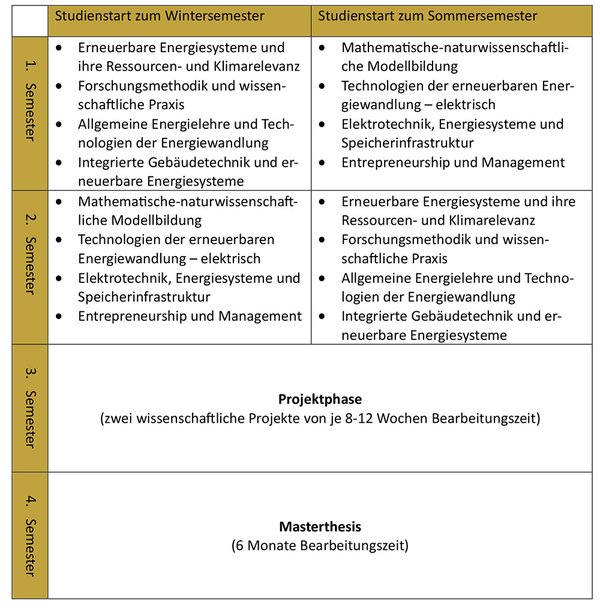
SENCE begins with two full-time study semesters. These two semesters can be taken independently of one another, which makes it possible to start the program in either the winter or summer semester.
In general, all courses are structured in larger full-day or half-day blocks rather than weekly or biweekly sessions. The winter semester places a thematic focus on thermodynamic topics: in addition to a foundational lecture on thermodynamics, this includes technologies of thermal renewable energy applications. Economic and legal specializations are also part of the curriculum. The winter semester takes place predominantly at Hochschule Rottenburg; however, we aim to minimize the number of trips between campuses and avoid switching locations within a single day or ideally within the same week.
The summer semester, by contrast, focuses on electrical engineering and non thermal renewable technologies such as wind or hydropower, as well as modeling and the development of leadership and key competencies. The summer semester is held primarily at HFT Stuttgart.
The third semester consists of two project assignments in which students work on scientifically relevant questions within research groups at the two universities, at (inter)national research institutes, or in cooperation with energy suppliers, engineering firms, or public administration. Both projects may be completed at the same institution or partner organization, but each must constitute an independent piece of work.
The program concludes in the fourth semester with the master’s thesis, which—similar to the third semester—can be completed in cooperation with companies or within a research environment.
Winter Semester – depending on start date, 1st or 2nd semester
The winter semester provides an in depth understanding of thermodynamics and renewable energy technologies based on thermodynamic processes. It also strengthens students’ skills in independent scientific work and conveys fundamental knowledge of energy economics. Courses take place predominantly in Rottenburg.
The winter semester comprises four modules:
- Renewable Energy Systems and Their Resource and Climate Relevance
- Research Methodology and Scientific Practice
- General Energy Science and Energy Conversion Technologies
- Integrated Building Systems and Renewable Energy Systems
Summer Semester – depending on start date, 1st or 2nd semester
The summer semester provides advanced knowledge in electrical engineering and mathematical modeling, as well as fundamentals of entrepreneurial practice. It is held primarily at HFT Stuttgart.
The four modules are:
- Mathematical and Scientific Modeling
- Renewable Energy Conversion Technologies – Electrical
- Electrical Engineering, Energy Systems, and Storage Infrastructure
- Entrepreneurship and Management
3rd Semester – Project Semester
The third semester is dedicated to project work. Each student completes two independent projects, which may be carried out at the same institution but do not have to be.
Project topics are offered both by the two SENCE universities and by companies in the private sector. Students may also pursue their own project ideas, provided they meet the academic depth and thematic alignment required for SENCE.
As in the bachelor’s thesis, the methodology and core results are documented in a scientific report and presented to fellow students in a status seminar.
- Examples of completed projects
4th Semester – Master’s Thesis
The fourth semester is dedicated to the master’s thesis. It may be completed at one of the participating universities or in cooperation with external partners. The academic requirements are stricter than those for the project assignments in the third semester. Project assistants support students in acquiring and carrying out thesis projects.
The methodology and results are documented in a written thesis and presented to fellow students and supervisors. - Career Fields
-
The practice oriented and solution focused training prepares graduates for self employment or for positions in:
- Research institutes
- Plant and system manufacturers
- Energy suppliers
- Engineering and planning offices
- Energy agencies
- Associations
- Public policy and administration
Graduate Profiles:
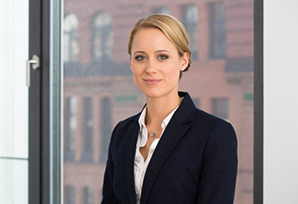
M.Sc. Linda Lochmann – born 1986, lives and works in Hamburg
During her bachelor’s degree in Infrastructure Management (B.Eng.) at Stuttgart University of Applied Sciences, she specialized in sustainable energy production and supply engineering alongside construction and project management.
To prepare for the SENCE master’s program, she completed an internship at an energy supplier, gaining practical experience in renewable energy project planning. During the master’s program, she worked as a student assistant in several wind energy companies and built valuable industry contacts. Her master’s thesis at W I N D Energien GmbH, in cooperation with ZSW Stuttgart, focused on combining renewable energies with storage technologies.
After graduation and extended travel, she moved to Hamburg—Europe’s wind energy capital—where she now works as a project engineer at Planet energy GmbH (a subsidiary of Greenpeace energy eG). She develops, plans, and implements wind farm projects involving municipalities and local citizens.
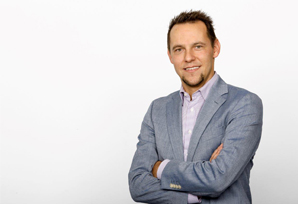
M.Sc., Dipl.- Ing. Hanno Brühl - born 1976, married, two children, lives in Ofterdingen
His qualification for the SENCE master’s program was a degree in Mechanical Engineering with a focus on Energy Technology in Wiesbaden. After six months as a freelance employee at an international project management engineering firm in Frankfurt, he began the SENCE program (09/2003–05/2005).
During his studies, he co founded Senergy GmbH with a fellow student, advising medium sized companies on renewable energy use and energy saving concepts.
In 2007, he transitioned into the evolving energy sector. After roles in district heating and renewable energy sales, he became Head of Renewable Energies and Energy Efficiency at Stadtwerke Tübingen GmbH in September 2010. His department now includes five employees, and he is responsible for expanding renewable energy and developing energy efficiency measures.
He is motivated by the opportunity to drive change in the energy sector: "The challenge was to adapt long established structures to the demands of a young ‘eco market’. A promising path is to combine solid, cautious business development with environmentally responsible, innovative action."
Stadtwerke Tübingen cooperates with several universities (Hohenheim, Stuttgart, Tübingen, Rottenburg) and offers internships as well as supervision of bachelor’s and master’s theses.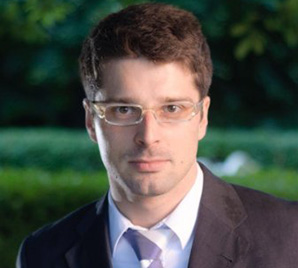
Dr., Dipl.-Ing. Tobias Erhart, Born 1979, married, one child, lives in Stuttgart
After completing secondary school and civilian service, Dr. Erhart studied Mechanical Engineering and Energy Technology at Ulm University of Applied Sciences (now Hochschule Ulm). Following internships at Bosch, Dornier, and DaimlerChrysler, he moved into research at EADS. His diploma thesis at EADS Daimler Research—on the development of a fuel cell reformer as an auxiliary power unit for passenger vehicles—sparked his interest in research and new energy technologies.
From 2005 to 2006, he completed the SENCE master’s program. After writing his master’s thesis on the simulation of material properties for ORC systems at Stadtwerke Esslingen, he decided to pursue research in this field. From 2007 to 2009, he worked as a research associate at zafh.net at Stuttgart University of Applied Sciences, contributing to national and international projects (RegioEnergie, POLYCITY). Since 2010, he has been a project manager at zafh.net, working on:- Optimization of biomass CHP plants
- ORC systems (RecoORC)
- Indoor climate optimization through natural ventilation (KonLuft)
- Optimization and storage of photovoltaic electricity (Licht & Luft)
He is completing his PhD part time at the University of Strathclyde in Glasgow on the optimization of heat driven ORC systems.
His main interests include the measurement, simulation, and optimization of thermal and electrical systems in the field of renewable energies.
From 2008 to 2011, Dr. Erhart taught Photovoltaic Systems at HFT Stuttgart. Since 2009, he has been a lecturer for Mathematical and Scientific Modeling in the SENCE master’s program.
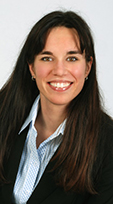
Verena Kindl, M.Sc., Dipl.-Ing. (FH)
Since 2012, Verena Kindl has been working in the field of Power to Gas in the Department of Renewable Energy Carriers and Processes at the Center for Solar Energy and Hydrogen Research (ZSW) in Stuttgart. Her research focuses on optimizing and further developing alkaline electrolysis.
She studied Mechanical Engineering at Esslingen University of Applied Sciences with a specialization in development and design, spending two semesters in Glasgow. She oriented her studies toward renewable energies and turbomachinery. After completing her diploma thesis “Flow Simulation of Valves with Check Function”, she earned a Postgraduate Certificate in Flow Simulation from the University of Southampton.
Motivated by the desire to contribute to the challenges and developments of the German energy transition, she pursued the Sustainable Energy Competence (SENCE) master’s program. As part of her master’s thesis at ZSW, she designed and built a membrane conditioning system to produce vehicle grade fuel by conditioning biogas. - How to Apply
-
To apply for the master’s program SENCE (Sustainable Energy Competence) at the University of Applied Forest Sciences Rottenburg, you apply directly to the university. The program has restricted admission, meaning motivational interviews are conducted before enrollment. A total of 25 study places are available.
Further information about the application process can be found here.
In addition to applying at HFR Rottenburg, applicants may also apply at the partner university HFT Stuttgart. The same admission requirements apply. More information is available on the partner university’s website.
- Additional Information
-
Further information about the M.Sc. Sustainable Energy Competence (SENCE) program can be found here.
