Self-image and profile
The Rottenburg School of Applied Sciences (HFR) is practice-orientated, innovative and aligned with the principles of sustainability. We are characterised by short distances and interdisciplinary connections.
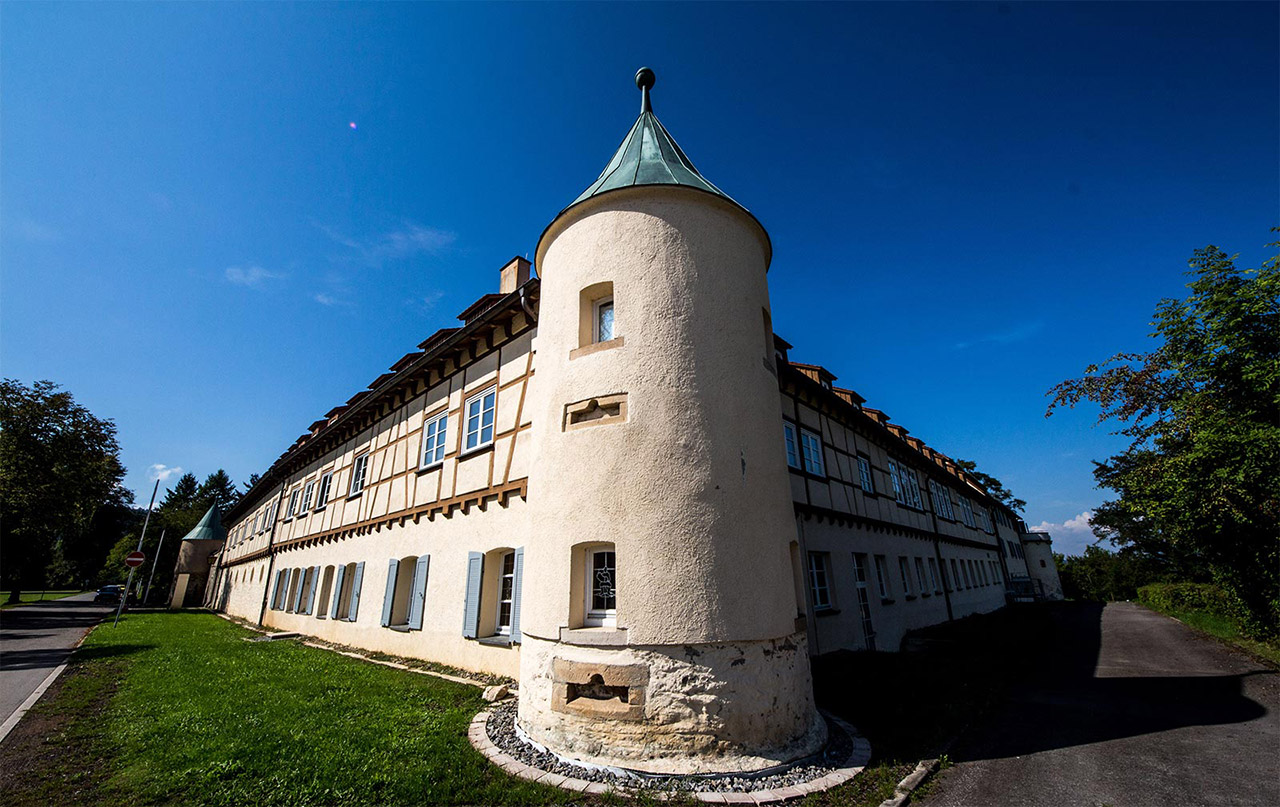
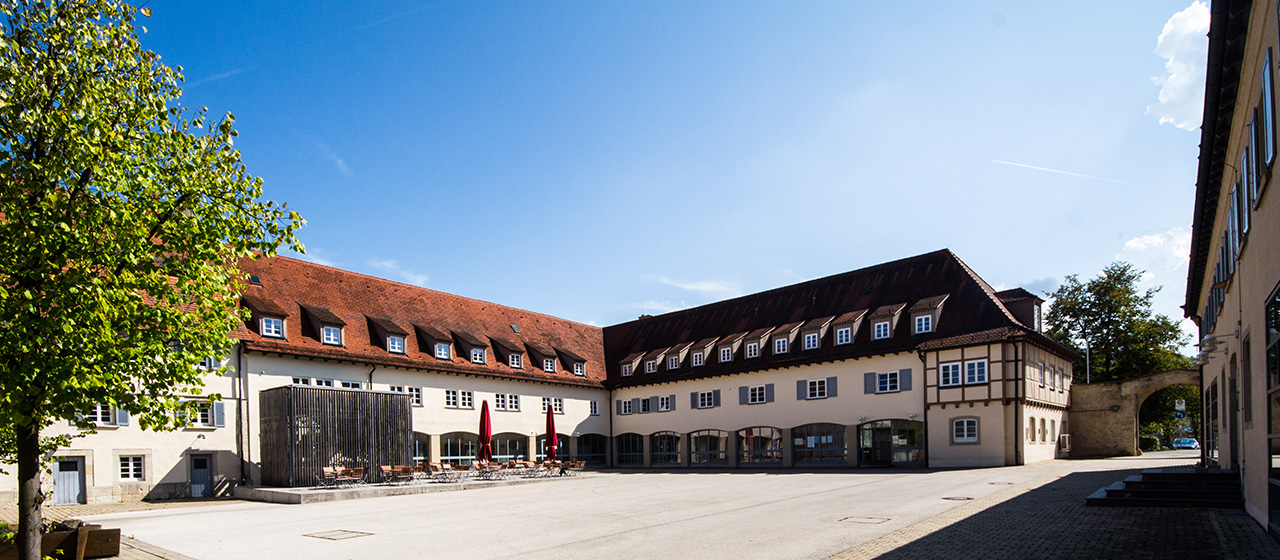
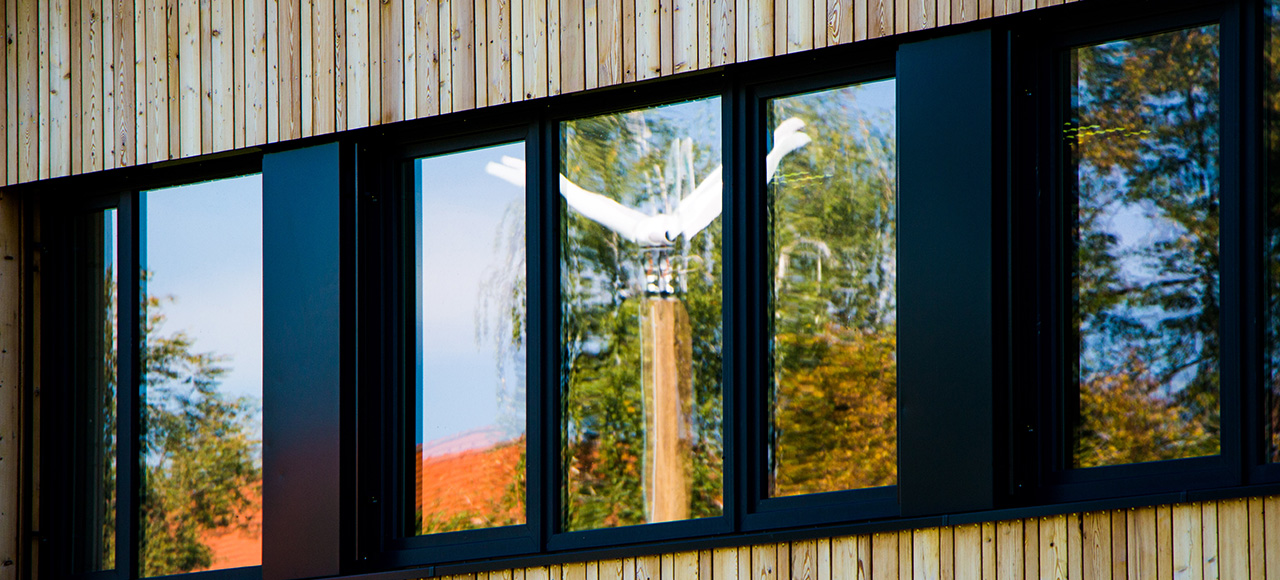
Our students appreciate the pleasant atmosphere and the personal interaction. The content of the degree programmes is geared towards future fields relevant to the labour market. With just under 1200 students, Rottenburg University of Applied Sciences is a small but future-orientated university with a clear forestry core profile.
| "Learning for the needs of tomorrow – with us, you acquire knowledge and expertise in the spirit of sustainability through individualised study." |
|---|
In its degree programmes, the university develops cross-sector solutions in the fields of forestry, timber industry, nature and environmental protection, landscape planning, water management, sustainable regional management and renewable energies. The focus is on the material and energetic utilisation of (forest) biomass, the management of scarce water resources and international development cooperation.
The aim of all degree programmes is to impart knowledge and skills for the responsible and sustainable use of natural resources. The HFR has received several awards from UNESCO for this forward-looking educational programme and won the "Profile and Cooperation – Excellence Strategies for Small and Medium-Sized Universities" competition organised by the Stifterverband der Deutschen Wissenschaft.
Our Values
The HFR sees itself as a place of openness, diversity and the free exchange of ideas in study, teaching and research. Here, knowledge is gained through critical inquiry, the fair contest of arguments and respectful dialogue. This self-image is founded on the core values of freedom of expression, human dignity, equality and the rule of law – values that underpin our democratic way of life. If these foundations are called into question, we take a clear stand and work together to protect them.
As a university, the HFR is a social space where people with different experiences, perspectives and life paths come together to learn, work and conduct research. It is also a place for critical engagement with social developments and thus assumes responsibility far beyond the campus. Academic freedom is indispensable for innovation, social progress and the stability of a vibrant democracy. Particularly in the face of growing challenges to academia and democratic values, the HFR is firmly committed to taking a stand, exercising responsibility and fostering an open, fair and diverse higher education landscape.
We are committed to a respectful, non-discriminatory working environment. Discrimination on the grounds of status, gender, origin, skin colour, religion, beliefs, age, sexual orientation, or physical or mental disability has no place at the HFR. Nor do we tolerate sexual harassment, sexual discrimination, or any form of bullying, threats or violence.
Furthermore, we support the following initiatives:
Weltoffene Hochschulen – Gegen Fremdenfeindlichkeit
Through these initiatives, we reaffirm our commitment to openness, diversity and democratic responsibility.
Code of Conduct
We, the members and staff of the Rottenburg University of Applied Sciences for Forestry, are aware of our social and personal responsibilities and have therefore adopted the following Code of Conduct as a voluntary commitment. It serves as our guideline for respectful behaviour in our daily interactions with one another.
University profile
Thanks to the consistent alignment of all its degree programmes with the principle of sustainability, the HFR is one of the universities in the state with the clearest educational profiles and research expertise. It prepares its students for professional life through comprehensive academic education (key skills and specialist expertise).
In doing so, the application-oriented integration of research and teaching forms an integral whole. The university offers 5 Bachelor’s degree programmes and 3 Master’s degree programmes.
The university maintains close links with numerous partner universities in many countries across Europe and the world. These partnerships primarily serve to facilitate international student exchange.
Study programmes
Renewable Energies, B.Sc. moreless
The transition to an efficient and sustainable energy economy is bringing about technical, economic and social upheaval and requires visionaries and problem solvers to shape it. The provision of renewable energies and their efficient use, the development of technologies and processes for renewable energy systems and the transformation of the energy supply system are the focus of the Bachelor's degree programme in Renewable Energies.
Forest Management, B.Sc. moreless
In addition to the ecological and social aspects of forests, the utilisation of wood as a renewable resource and the responsible use of it are of particular importance. This requires complex, long-term thinking and interdisciplinary skills. Building on natural and social science knowledge and technical understanding, the degree programme is geared towards practical implementation by "generalists".
Wood Management and Technology, B.Sc. moreless
The " Wood Management and Technology " degree programme provides students with the necessary scientific and technological foundations for the sustainable, innovative and efficient use of wood as a raw material. In addition to the management of wood flows, teaching and applied research focus on material and product development in the sawmill, paper and pulp, wood-based materials, and construction (timber) industries.
Sustainability Management in Spatial Development, B.Sc. moreless
The degree programme provides comprehensive knowledge on the sustainable management of rural areas. As an interdisciplinary Bachelor's degree programme, it is located at the interface between the natural and social sciences. Economic issues also play an important role, ranging from the basics of economics and tourism economics to business management and administration aspects.
Water Resource Management, B.Sc. moreless
Dealing with the globally scarce resource of water requires project-orientated, multifunctional and interdisciplinary skills in both industrialised and developing countries. In addition to scientific and technical principles, social science topics are also of great importance. The integration of concrete, practice-orientated projects is central to the programme.
Forest Management, M.Sc. moreless
The Master's degree programme in Forest Management is aimed at graduates of Bachelor's degree programmes in Forestry and Forest Sciences who wish to acquire skills in the strategic planning and management of forestry operations in accordance with the principles of sustainable and multifunctional forest management.
Sustainable Energy Competence (SENCE), M.Sc. moreless
This degree programme is primarily aimed at graduate engineers and B.Sc. students from natural science and technical degree programmes. In four semesters (including the Master's thesis), the theory and practical application of renewable energies for the generation of heat and electricity with solar energy, heat pumps and water and wind power as well as wood as a renewable energy source are covered. The "Sence" degree programme is a cooperative degree programme and is offered jointly with the University of Stuttgart, with the central coordination of this accredited degree programme being the responsibility of Rottenburg University of Applied Sciences.
Resource-efficient Building, M.Sc. moreless
The demands placed on housing and living space in the societies of industrialised, rapidly growing, emerging and developing countries are constantly changing. The need for healthy, sustainable and personalised living conditions is increasing.
The aim of the new four-semester Master's degree programme is to impart comprehensive knowledge of resource and energy efficiency in the construction industry with a focus on modern timber construction. In addition to developing energy and resource-efficient buildings, graduates will have the expertise to assess and evaluate construction concepts from an ecological, economic, social, technical and process-orientated perspective.