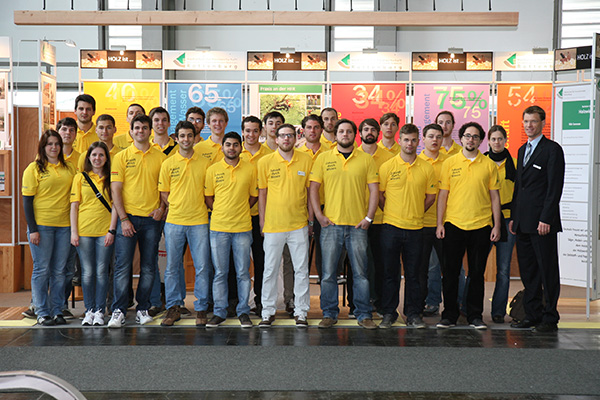
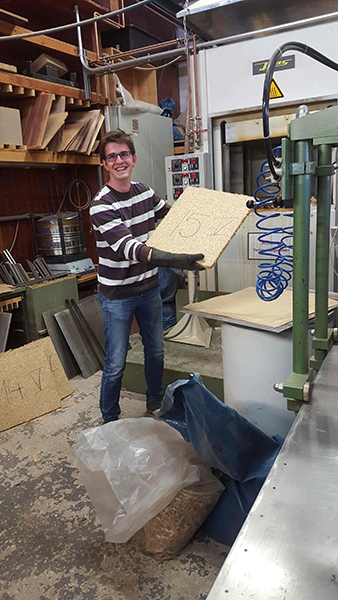
• Studentin der Holzwirtschaft im Technikum

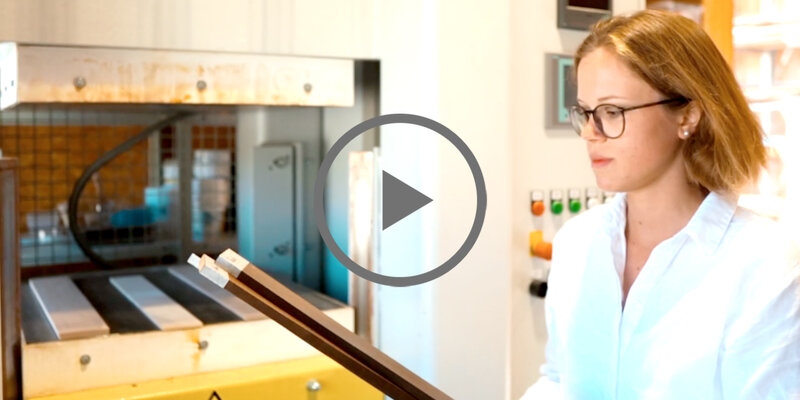
    Video Portrait

    Start the movie »

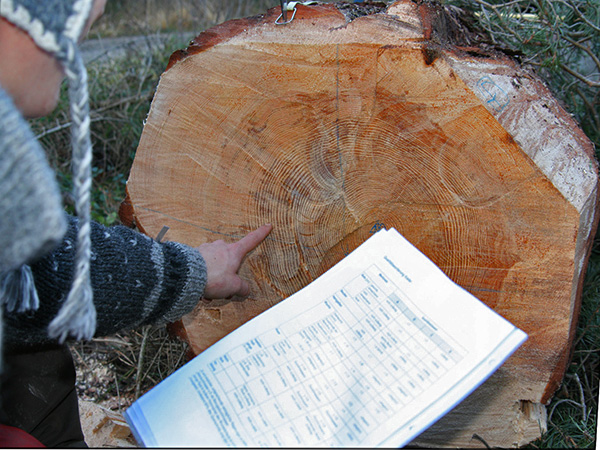
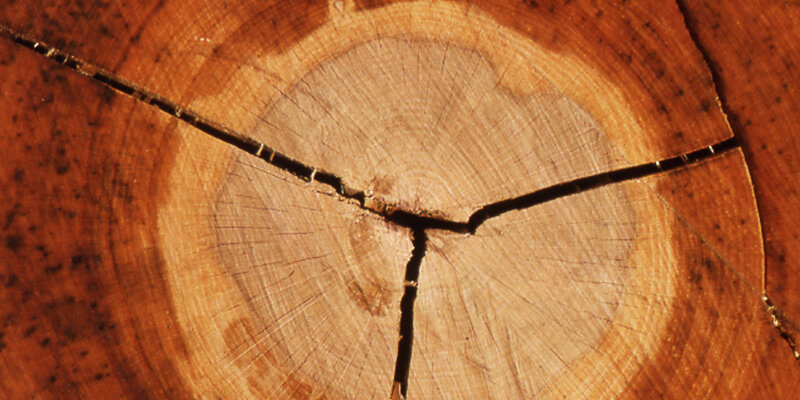
  • Detailaufnahme einer Baumscheibe mit trocken Riss und Jahresringe

    B.Sc. Wood Management and Technology

    B.Sc. Wood Management and Technology

Wood – THE resource of the future: renewable, environmentally friendly, versatile!

Wood Management and Technology (Bachelor of Science)

The construction, paper, furniture and chemical industries, as well as the energy sector, require ever-increasing quantities of wood. In addition to conventional logs and industrial timber, the ever-growing demand is also being met using alternative wood sources. These include, for example, residual forest wood, bark, sawmill by-products, waste wood and residual wood products from landscape conservation.

Our 7-semester degree programme focuses on the current and future needs of the raw materials market and the efficient and sustainable use of wood as a versatile raw material. The focus is on the innovative and sustainable use of wood as a material.

At a Glance
Ausgezeichnet Logo Hochschule für Forstwirtschaft Rottenburg Logo UNESCO-2014 Hochschule für Forstwirtschaft Rottenburg
Program Capacity

The Wood Science program has no admission restrictions, meaning there is an unlimited number of spots available for the program.

DURATION OF STUDY

7 semesters (6 theory semesters with numerous exercises and field trips, and 1 practical semester)

START DATE

Admission to the first semester takes place once a year at the start of the winter semester.

DEGREE

Bachelor of Science (B.Sc.)

PRACTICAL SEMESTER

In the fifth semester

LANGUAGE OF INSTRUCTION

German

PRACTICAL TRAINING

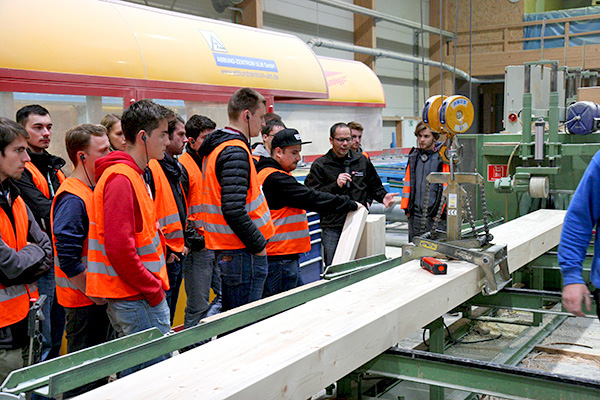
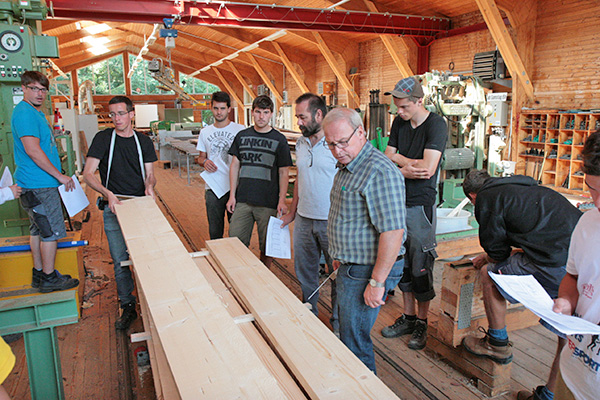
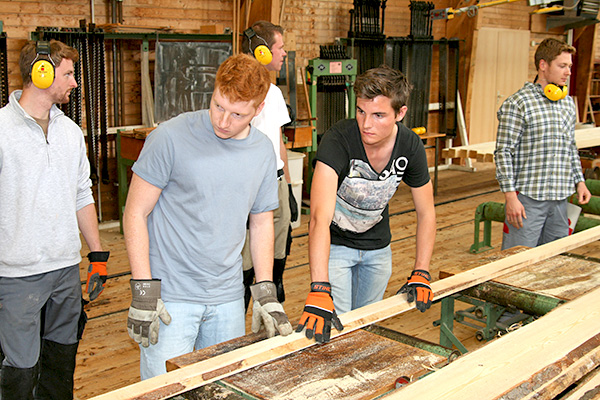
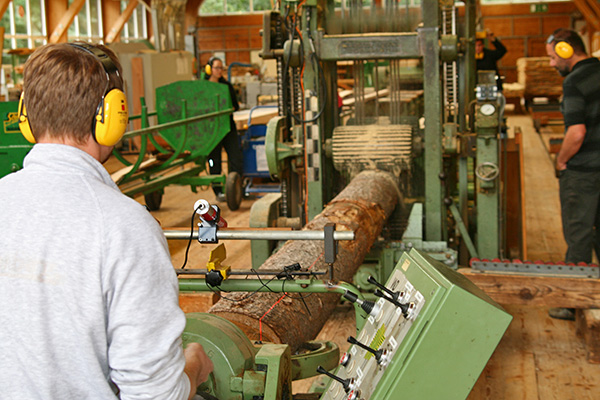
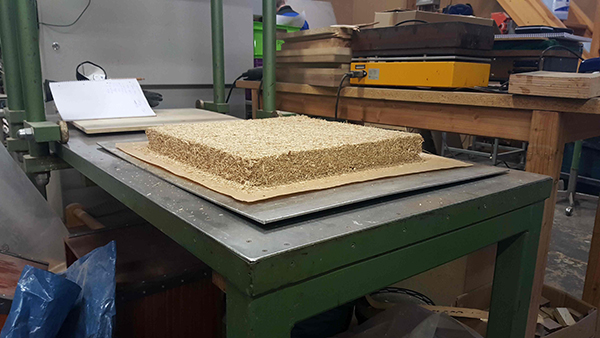
The program places great emphasis on practical training. This focus is met through numerous field trips, practical exercises in the university’s own laboratory, and practice-oriented project work with partners from academia and industry.

ELECTIVE COURSES

A wide range of elective courses—for example, in foreign languages, public relations, business management, sawmill technology, and roundwood procurement—enables students to tailor their academic profile to their individual interests.

Additional Qualifications

In addition to its required courses, the program offers further qualification opportunities, such as the carpenter/joiner/cabin builder machine operator certificate, the chainsaw course, the trainer certification exam, as well as mediation and conflict management.

Course Structure

The Bachelor's degree programme in Wood Management and Technology
consists of the basic modules of foundation studies, advanced studies, practical semester and Bachelor's thesis.

The foundation degree programme comprises the 1st and 2nd semesters. It consists of 11 modules with a total of 22 courses. Here, students are systematically taught a broad basic knowledge on which the subsequent modules in the main study programme build.

The main study programme comprises semesters 3 to 7 and includes the practical semester (supervised work placement in semester 5) and the Bachelor's thesis (semester 7). It is divided into a total of 19 modules with 26 courses in which students are intensively prepared for the practical semester and professional life.

Basic studies (1st & 2nd semester) moreless

MODULE 1 ENGINEERING FUNDAMENTALS I

Courses:

  • Mathematical and physical fundamentals for engineers I
  • Chemical basics I 

MODULE 2 FORESTRY BASICS

Courses:

  • Botany
  • Forestry

MODULE 3 MATERIALS SCIENCE

Courses:

  • Materials science wood
  • Materials science plastics

MODULE 4 CONSTRUCTION MATERIALS SCIENCE AND MECHANICAL ENGINEERING

Courses:

  • Building materials science
  • Introduction to mechanical engineering

MODULE 5 BASICS OF INFORMATION PROCESSING

Courses:

  • Fundamentals of information and data processing
  • Fundamentals of statistics

MODULE 6 BASICS OF ECONOMICS AND CIVIL LAW

Courses:

  • Fundamentals of economics and business administration
  • Civil law

MODULE 7 SCIENTIFIC BASICS 2

Courses:

  • Mathematical and physical basics II
  • Chemical fundamentals II

MODULE 8 WOODWORKING MACHINERY AND PRODUCTION AUTOMATION

Courses:

  • Basics of mechanical woodworking
  • Fundamentals of production automation

MODULE 9 ENGINEERING SCIENCE 1

Courses:

  • Statics
  • Descriptive geometry

MODULE 10 TIMBER MARKET AND MARKETING AND DATA MANAGEMENT

Course:

  • Timber market and marketing
  • Data management

MODULE 11 PROJECT MANAGEMENT AND SCIENTIFIC WORK

  • Project management
  • Scientific work

Main study programme (3rd to 7th semester) moreless

MODULE 12 LOG SORTING AND MEASUREMENT

Courses:

  • Quality characteristics of log sorting
  • Round timber measurement

MODULE 13 CAD – MACHINE CONTROLS IN WOODWORKING

Courses:

  • Introduction to CAD
  • Machine control in woodworking

MODULE 14 ENGINEERING 2

Courses:

  • Strength of materials
  • Basics of building physics

MODULE 15 APPLIED BUSINESS ADMINISTRATION

Courses:

  • Applied Business Administration

MODULE 16 NON-STRUCTURAL WOOD PRODUCTS

Courses:

  • Non-structural wood product

MODULE 17 ELECTIVE SUBJECTS

Courses:

  • Compulsory elective subjects

MODULE 18 SAWMILL TECHNOLOGY

Courses:

  • Production technology in the sawmill, planing and glulam industry
  • Energy recovery from wood

MODULE 19 PROCESS ENGINEERING OF WOOD-BASED MATERIALS AND FURNITURE CONSTRUCTION

Courses:

  • Process engineering of wood-based materials
  • Furniture construction

MODULE 20 CONSTRUCTION IN TIMBER CONSTRUCTION – TIMBER INDUSTRY POLICY

Courses:

  • Construction in timber construction
  • Timber industry policy

MODULE 21 METHODS OF CORPORATE MANAGEMENT, PROCESS DESIGN AND OPTIMISATION

Courses:

  • Methods of corporate management and process design and optimisation

MODULE 22 SUPERVISED INTERNSHIP

Practical semester in the 5th semester

MODULE 23 PROCESS ENGINEERING IN THE PAPER AND PULP INDUSTRY

Courses:

  • Process engineering pulp and paper

MODULE 24 ENERGY-EFFICIENT TIMBER CONSTRUCTION AND WOOD PRESERVATION

Courses:

  • Energy-efficient timber construction
  • Wood biology and wood preservation

MODULE 25 CHANGE MANAGEMENT

Courses:

  • Change management

MODULE 26 BUSINESS PLAN

Courses:

  • Business plan

MODULE 27 MATERIAL DEVELOPMENT

Courses:

  • Material development

MODULE 28 INNOVATIVE USE OF WOOD

Courses:

  • Innovative use of wood

MODULE 29 INTERNATIONAL TIMBER TRADE

Courses:

  • International timber trade

MODULE 30 BACHELOR THESIS

Completion and defence of the Bachelor's thesis in the 7th semester

Practical semester moreless

In the practical semester, students are given the opportunity to actively contribute their knowledge to companies and take on tasks and responsibility in the form of a supervised work placement.

This leads to valuable contacts with potential employers and often also topics for the Bachelor's thesis.

If desired, the internship can be split and completed in two companies, which can be based in Germany or abroad.
 

Bachelor thesis moreless

The completion of a final thesis is required for the B.Sc. in Wood Management and Technology degree. The task of the thesis can be derived from the cooperation with the internship company and is carried out in close dialogue with the supervisor.
Career fields

Our graduates have access to a wide range of interesting career opportunities thanks to their solid education. Potential employers include, for example:

  • the sawmill and wood-based materials industry
  • national and international timber trade
  • artisanal and industrial timber construction
  • the machinery industry
  • the paper and pulp industry
  • associations representing the wood sector
  • ministries
Quirin Schaupp

Quirin Schaupp
As part of the second cohort starting in the winter semester of 2012, I began my studies in Wood Science in Rottenburg. I successfully completed the program in summer 2016. I then continued directly into the master’s program in Wood Science at the University of Hamburg, which I also completed successfully in January 2019.

Since finishing my master’s degree, I have been working at Hördener Holzwerk GmbH in Gaggenau, a KVH and glued laminated timber manufacturer specializing in the prefabricated housing industry and timber construction, employing around 75 people. Due to the company’s size, my range of tasks is broad and varied, spanning from quality management to product costing and PEFC auditing. I also regularly supervise individual projects. Among the most interesting projects were the implementation of a contactless wood moisture measurement system and the planning and commissioning of a lamella humidification system to improve bonding quality.

Looking back, I can say that what I appreciated most about studying at HFR was the family-like atmosphere—both within the degree program and on campus. I would recommend the Wood Science program for several reasons. The professors, staff, and external lecturers are highly qualified and extremely motivated, and the support is excellent due to the small cohort size. Additionally, the program offers a strong practical orientation, which is highly valued by companies. In my opinion, graduates in Wood Science can rely on a solid, broadly based qualification that opens many doors in industry and research.

Sophie_Koch

Sophie Koch
After completing my B.Sc. in Wood Science at HFR in 2017, I went on to Maastricht University to pursue a Master of Science in Biobased Materials. This is a highly research-oriented program focused on developing materials from renewable raw resources. Since August 2020, I have been pursuing a PhD at ETH Zurich (Swiss Federal Institute of Technology), in the Wood Materials Science group, which works on the functionalization and modification of wood.
In my doctoral research, I remove the wood component lignin in a way that preserves the structure of natural wood. I then fill the resulting spaces between the cellulose bundles with a matrix, enabling the creation of entirely new materials—materials that can exhibit extremely high mechanical properties or even electrical conductivity.

The question of how we will use our renewable resources in the future is becoming increasingly urgent in light of climate change. The B.Sc. Wood Science program provides a broad foundational education on this topic. From there, one can develop in many directions that will play an important role in the sustainable development of our world.

The ability to engage in discussion and to justify one’s own opinion constructively are skills I learned during my Wood Science studies—and they benefit me greatly in my professional life.

Magdalena Nafz

Magdalena Nafz
From 2012 to 2016, I was the only woman in the second cohort of the Wood Science program at Schadenweilerhof.

After graduating, I worked for one year in Florida for the Austrian sawmill group Klausner. There, I was able to consolidate and deepen the technical and economic knowledge gained during my studies. I then joined Klenk Holz AG in Oberrot as a sales representative for pallet and sawn timber, responsible for Germany and Italy. After the company was acquired by Binderholz, my work shifted to the sales of sawn timber and planed goods in the USA, Central and South America, the Caribbean, and England.

After four years of international experience in the sawmill and planing industry at European and American locations, I returned home. Today, my work in our family business, Nafz Holzhaus, includes advising customers on purchasing a healthy wooden home, supporting them throughout the construction phase, and accompanying them through to the handover of the keys and move-in. Interface management between marketing, sales, and architecture, as well as personnel and financial tasks, round off my role as executive assistant. Our mission at Nafz Holzhaus is to help as many people as possible obtain truly sustainable and healthy living spaces that benefit both people and the environment.

HFR is such a family-oriented university—I can wholeheartedly recommend it to anyone. The personal and highly competent support is outstanding. The broad structure of the Wood Science program enables you to launch a career in a wide variety of sustainable fields.

Axel Kreuzberger

Axel Creuzberger
When I started in the second cohort in 2012, it never occurred to me that I would one day work for a company offering scanner systems and software solutions. But let me start at the beginning.

Since sawmills always fascinated me during my studies, it was a logical step to complete my thesis in a sawmill operation.

After finishing my thesis, I received a job offer from HIT Torgau, where the thesis had been conducted, and I gladly accepted. As an assistant to the department manager, I gained a wide range of experience and increasingly worked with the scanner systems of my current employer. Due to personnel changes, I was promoted to department manager after a short time, which allowed me to gain detailed knowledge in additional areas beyond scanner systems.

After a brief stop at another major German sawmill, I began my current position in 2018 at Microtec srl., headquartered in Brixen (Italy).

It may not seem obvious that a degree in Wood Science is ideal preparation for working as a Key Account Manager, but the opposite is often true. My main task is to advise customers on the best solutions. Since both the material wood and the sales markets of my customers vary greatly, each project is unique. This requires not only an understanding of wood as a material and relevant standards but also knowledge of further production steps up to modern timber construction. Essentially, exactly what is taught as a foundation during the degree program.

How to apply

The Wood Management and Technology degree programme has no entry restrictions, meaning there are an unlimited number of places available on the programme.

Further information on the application process is available here. 

Further information

You can find further information about the B.Sc. in Wood Management and Technology programme here.