Authorised representatives and other contact persons
The representatives of Rottenburg University of Applied Sciences represent the interests of the university, its members and affiliates in a wide variety of areas.
Enquiries and advice for all questions relating to data protection

Maximilian Musch (Magister Artium)
External data protection officer of the university according to Art. 37 GDPR
T. +49 7542/94921-02
M.datenschutz@hs-rottenburg.de
Legal regulation:
GDPR Art. 37+39
(Appointment and tasks of a data protection officer)
https://dsgvo-gesetz.de/art-37-dsgvo/
https://dsgvo-gesetz.de/art-39-dsgvo/
Task:
The tasks of the data protection officer are described in principle in the GDPR. In particular, the role involves monitoring the proper application of data processing procedures, ensuring that employees are familiarised with data protection regulations through appropriate measures, and supporting the university in this regard. It also includes advising and informing staff on data protection requirements and responsibilities. To this end, the data protection officer examines and analyses the processes, roles, contexts, data processing procedures, etc. and advises the university accordingly. The data protection officer is the point of contact for all employees and data subjects with regard to the processing of personal data within the university's area of responsibility. The data protection officer must be involved in advance in new data processing activities, projects, the commissioning of new service providers, etc. The tasks of the data protection officer can be summarised as an advisory/control service. These tasks are carried out independently in coordination with the university management and, if necessary, also at the request of the responsible departments.
Enquiries and advice for all questions relating to information security

Dr. Bianca v. Mangoldt
Information Security Officer; Data Protection Coordinator
T. +49 7472/951-103
F. +49 7472/951-200
M.isb@hs-rottenburg.deRoom: 102, Baroque Building
Task:
The Rottenburg School of Applied Sciences attaches great importance to maintaining the security of its information processing systems and processes with the protection goals of availability, integrity and confidentiality. An information security management system (ISMS) has therefore been introduced. In this context, the Information Security Officer (ISO) is responsible for safeguarding information of all kinds, not just IT-related aspects.
The ISB acts as a central point of contact, acting on behalf of the Rectorate, which nevertheless retains responsibility for information security. The ISB is
responsible for all information security matters within the university.
The ISB has the right to speak directly to the Rectorate at any time in order to inform it of security incidents, risks and measures. He/she must also be informed comprehensively and in good time about what is happening at the university insofar as it relates to his/her activities. The main task of the ISB is to advise the Rectorate in the fulfilment of its duties with regard to information security and to support the Rectorate in its implementation. Their tasks include, among other things,
- implement and manage the information security process and participate in all related tasks,
- to support the Rectorate in drawing up the guidelines on information security,
- to coordinate the creation of the security concept, the emergency preparedness concept and other sub-concepts and system security guidelines, and to issue further guidelines and regulations on information security after approval by the Rectorate,
- initiate and review the realisation of safety measures,
- report to the Rectorate and those involved in the information management process on the status quo of information security,
- coordinate security-related projects,
- investigating security incidents and initiating, implementing and coordinating awareness-raising and training measures on information security.
The ISB must also be involved in all major projects that could have a significant impact on information processing in order to ensure that security aspects are taken into account in the various project phases. For example, the ISB should be involved in the planning and introduction of new applications and IT systems, as well as new hardware components or significant changes to the infrastructure.
Counselling and multiplier for safety-related issues

Prof. Dr.-Ing. Gerald Steil
Professorship of Mechanical Engineering and Process Engineering
T. +49 7472/951-143
F. +49 7472/951-200
M.steil@hs-rottenburg.deRoom: 6.02, Kienzle Building
Consultation hours: by arrangement
Legal regulation:
Task:
Safety officers provide support at their respective work levels without a fixed time commitment. They act as multipliers and serve as the first point of contact for employees regarding safety-related issues. Through their presence, role-model function, and collegial influence, they promote and encourage safety-compliant behaviour among staff. In particular, safety officers should monitor workplaces and the working environment to ensure that the prescribed protective devices and equipment are in place. Safety
officers have volunteered for this task on a
voluntary basis, which is an additional task for them alongside their usual work. Due to their local knowledge, expertise and specialist knowledge, the safety officers also have the task of recognising accident and health hazards in their area of work and responding appropriately.
Responsible for the university's ethics programme to support the subjects of ethics and sustainable development

Dr. Katrin Schwineköper
Research Officer – Institute for Applied Research (IAF); Ethics Officer
T. +49 7472/951-218
F. +49 7472/951-200
M.schwinekoeper@hs-rottenburg.deRoom: 111, West Wing
Legal regulation:
rtwe department for technology and science
Task:
The Department of Technology and Science Ethics (rtwe) was founded in 1991 as a central institution of the state universities of applied sciences in Baden-Württemberg. Its task is to support the offer and establishment of the subjects of ethics and sustainable development at the universities as part of the funding programme for technology and science ethics. The ethics officers are elected by the senate of their university. They contribute to the ethics programme by coordinating its objectives with the head of the RTWE and by initiating lectures, conferences, and seminars for students and faculty in addition to the standard teaching programme. They are also the contact persons for teachers and students in the field of ethics and philosophy.
Responsible for teaching evaluation and study programme survey.
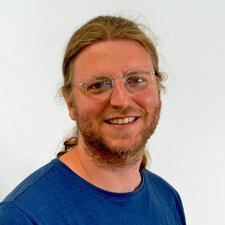
Dipl.-Päd. Benedikt Fleisch
Quality Assurance Officer for Studies and Teaching
T. +49 7472/951-202
F. +49 7472/951-200
M.fleisch@hs-rottenburg.deRoom: 105, West Wing
Sprechzeiten
Tuesday to Friday by appointment
Statutory Order:
Task:
An important instrument of quality assurance is the evaluation of teaching and study programmes. The aim is to review and improve the quality of study programmes for students in line with the HFR's quality standards. Evaluation is therefore an essential component of the HFR's quality management system. The scope and procedures of the evaluation are defined in the evaluation statutes.
The focus of the evaluation is the regular survey of students about their courses. In addition, there is a degree programme survey and a first semester survey.
The evaluation officer centrally supervises and manages all evaluation procedures related to the QA of teaching and studies.
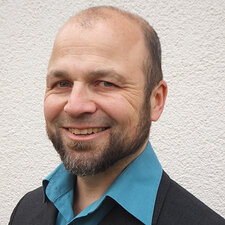
Prof. Dr. sc. agr. Jens Poetsch
Professor of Agronomy; Head of the BSc Renewable Energies programme
T. +49 7472/951-150
F. +49 7472/951-200
M.poetsch@hs-rottenburg.deRoom: 6.09, Kienzle Building
Consultation hours: At any time by appointment (telephone, e-mail)
Substitution
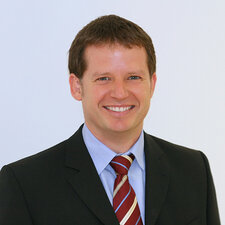
Prof. Dr. rer. nat. Steffen Bold
Professor of Hydrology, Hydrological Modeling and GIS
T. +49 7472/951-274
F. +49 7472/951-200
M.bold@hs-rottenburg.deRoom: 206, Baroque building
Office hours: At any time by appointment (telephone, e-mail)
Legal regulation:
Studierendenwerk Tübingen Hohenheim
Task:
The Representative Assembly adopts the statutes and elects the members of the Administrative Board. The rectors and chancellors of the universities, as well as full-time teaching staff and students of the universities for which the Studierendenwerk Tübingen-Hohenheim performs social counselling tasks, are members of the Representative Assembly by virtue of their office. Depending on the number of students at the respective institutions, two to four representatives are elected in each case.
Development and coordination of the HFR's further education and training programmes
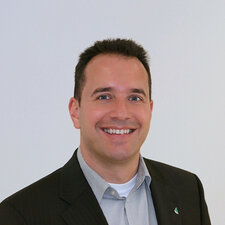
Prof. Dr. Dirk Wolff
Professorship for Forest Operations
T. +49 7472/951-242
F. +49 7472/951-200
M.dirk.wolff@hs-rottenburg.deRoom: 125, South Wing
Office hours: By arrangement
Statutory order:
Legal mandate according to LHG §31
Task:
The universities should offer academic and artistic continuing education in the form of continuing education programmes and contact studies.
Coordination of teaching and research activities in the HFR teaching area
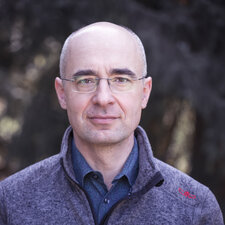
Prof. Dr. habil. Sebastian Hein
Professorship of Silviculture, Forest Growth and Yield, Tree breeding; Scientific Director of the International Office
T. +49 7472/951-239
F. +49 7472/951-200
M.hein@hs-rottenburg.deRoom: 120, South Wing
Consultation hours: By arrangement
Task:
This task provides information to support teaching and research activities within the HFR teaching area and facilitates coordination among the relevant stakeholders. After all, the teaching and research landscape at HFR extends beyond laboratories and technical centres. The educational forest in the Rammert, a forested mountain range in the Keuperbergland with an area of 2,500 hectares, 900 hectares of which are educational hunting grounds (plus around 340 hectares of fields), and the two-kilometre-long educational watercourse on the Neckar are large and nearby recreational areas for the population. At the same time, these natural areas are important outdoor laboratories for teachers and students, i.e., demonstration, project and projection areas and thus three practical learning locations. In this natural and cultural area, there are two forest districts of the Rottenburg am Neckar municipal forest as well as an "Experimental Forest" with a good 40 silvicultural and forest growth research trial areas on main and numerous secondary tree species. A further 10 or so short-rotation and agroforestry trial plots can be found in the wider vicinity of the university in the transition from closed forest to open land.
Development and implementation of information and counselling services on business start-up issues
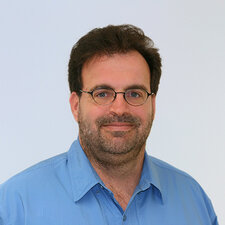
Prof. Dr. Steffen Abele
Professorship for Rural Economics
T. +49 7472/951-277
F. +49 7472/951-200
M.abele@hs-rottenburg.deRoom: 203, Baroque building
Office hours: By arrangement
Task:
Business start-up counselling at the HFR is aimed at anyone who wants to set up their own business and focuses, among other things, on spin-offs and start-ups that develop from research projects or project groups and work within the university. In addition, students and graduates with business ideas for setting up a company or taking up expert and consultancy work are supported, as are students and graduates who are about to make a decision about taking over or succeeding a business. Since spring 2020, the regional start-up network "Pioniergarten", a merger of start-up activities at Rottenburg University of Applied Sciences and Reutlingen University, has been an important component of the university's business start-up programme. In addition to expanding the network, the aim is to strengthen start-ups from the university sector in the Neckar-Alb region in particular. The creation of various forms of cooperation is essential here. Start-ups from both universities, but also from the Neckar-Alb region, are to be given a contact point through which they can gain access to start-up-related support and all the necessary resources. The project is funded by the Federal Ministry for Economic Affairs and Energy as part of the Exist programme.
Enquiries and advice on sustainability issues at the HFR
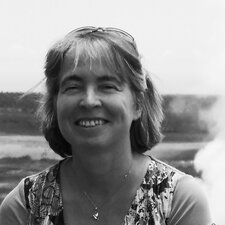
Prof. Dr. habil. Heidi Elisabeth Megerle
Professor of Applied Geography and Planning
Head of BSc Water Resource Management degree programmeT. +49 7472/951-243
F. +49 7472/951-200
M.megerle@hs-rottenburg.deRoom: 210, Baroque building
Office hours: At any time by appointment (telephone, e-mail)
Task:
The Sustainability Officer ensures that sustainability issues are continuously anchored and further developed in the guidelines, statutes, committees and degree programmes of the university.
responsible for environmental management at the HFR
B.Sc. Johannes Haug
Officer for the Climate Management and Occupational Health and Safety Department
T. +49 7472/951-178
F. +49 7472/951-200
M.haug@hs-rottenburg.deRoom: 105, Baroque building
B.Sc. Nicole Veith
Officer for the Climate Management and Occupational Health and Safety Department
T. +49 7472/951-115
F. +49 7472/951-200
M.nicole.veith@hs-rottenburg.deRoom: 105, Baroque building
Task:
The Environmental Officers (EO), also appointed by the Rectorate, are responsible for operationalising the strategic orientation of the environmental protection commitment specified by the UMB in coordination with the Rectorate. Their tasks include, in particular, the implementation of and compliance with environmental protection regulations, the monitoring and further development of methods and processes for the continuous improvement of the EMS, the supervision and control of the environmental programme, the coordination and further development of environmental protection projects at the university, the provision of information to employees on environmental protection issues and support in the preparation and implementation of internal environmental audits.
Responsible for Environmental Management at the HFR

Prof. Dr. rer.nat. Martin Brunotte
Professorship for Renewable Energies and Energy Planning
T. +49 7472/951-149
F. +49 7472/951-200
M.brunotte@hs-rottenburg.deRoom: 6.11, Kienzle Building
Tasks:
The Environmental Management Officer (EMO) is appointed by the Rectorate. Its main tasks are the strategic orientation of the EMS, the maintenance and improvement of the EMS, the promotion of environmental awareness at HFR and the monitoring of internal audits and the environmental management review.
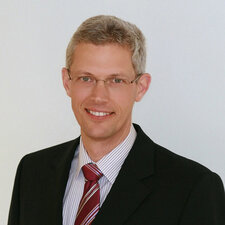
Prof. Dr. Matthias Scheuber - Prorector
Professorship for Applied Data Processing in Forestry
T. +49 7472/951-205
F. +49 7472/951-200
M.scheuber@hs-rottenburg.deRoom: 102, West Wing
Substitution
Prof. Dr. rer.nat. Martin Brunotte
Professorship for Renewable Energies and Energy Planning
T. +49 7472/951-149
F. +49 7472/951-200
M.brunotte@hs-rottenburg.deRoom: 6.11, Kienzle Building
Legal regulation:
Task:
They are responsible for ensuring that students with disabilities or chronic illnesses are not disadvantaged in their studies and can fully benefit from the university's programmes independently, wherever possible. To support this, they appoint a representative whose tasks are defined in the university's basic regulations.
for matters relating to good scientific practice or scientific misconduct in research at the HFR
Prof. Dr. habil. Sebastian Hein
Professorship of Silviculture, Forest Growth and Yield, Tree breeding; Scientific Director of the International Office
T. +49 7472/951-239
F. +49 7472/951-200
M.hein@hs-rottenburg.deRoom: 120, South Wing
Consultation hours: By arrangement
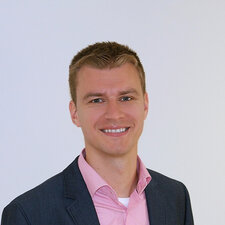
Prof. Dr. Marcus Müller
Professorship of Materials Development and Processing
T. +49 7472/951-146
F. +49 7472/951-200
M.mueller@hs-rottenburg.deRoom: 6.07, Kienzle Building
Office hours: By arrangement
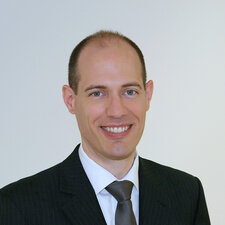
Prof. Dr. rer. pol. Tobias Veith
Professorship for Energy Economics
T. +49 7472/951-144
F. +49 7472/951-200
M.veith@hs-rottenburg.deRoom: 6.08, Kienzle Building
Dr. Katrin Schwineköper
Research Officer – Institute for Applied Research (IAF); Ethics Officer
T. +49 7472/951-218
F. +49 7472/951-200
M.schwinekoeper@hs-rottenburg.deRoom: 111, West Wing
Legal provision:
LHG § 3 (5) Freedom of science and the arts, research, teaching and study; academic integrity
Task:
As part of self-regulation in academia, universities establish rules for compliance with generally accepted principles of good academic practice and for dealing with academic misconduct.
Enquiries and advice on issues relating to equal opportunities for women and men
Legal regulation:
Task:
The Equal Opportunities Officer is responsible for promoting gender equality in accordance with constitutional law and for addressing existing disadvantages faced by women in academia, including both faculty and students. The Equal Opportunities Officer has the right to participate in job advertisements at an early stage and to inspect application documents. In the case of vacancies in areas with a low representation of women, the Equal Opportunities Officer can take part in interviews and selection interviews.
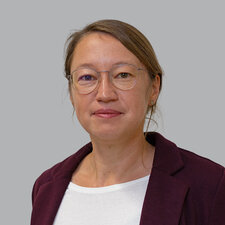
Prof. Dr. Steffi Heinrichs
Professorship of Botany and Forest Ecology
T. +49 7472/951-233
F. +49 7472/951-200
M.heinrichs@hs-rottenburg.deRoom: 128, South Wing
Consultation hours: By arrangement
Deputy
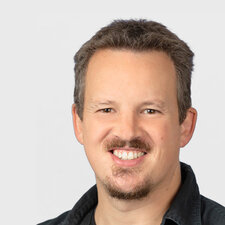
Prof. Dr. Holger Jäckle
Professor for Forest Management Planning & Geoinformation; Scientific Director of the Institute for Applied Research (IAF);
Supervision of the GIS LaboratoryT. +49 7472/951-236
F. +49 7472/951-200
M.jaeckle@hs-rottenburg.deRoom: 322, South Wing
Legal regulation:
Task:
Without prejudice to the responsibility of university bodies and committees, the contact person works to ensure that members and affiliates of the university are protected from discrimination on the grounds of race, ethnic origin or religious and ideological identity.
Confidential Advisor for sexual discrimination, sexual harassment and violence
The Ministry of Science has appointed Michaela Spandau, a solicitor from Stuttgart, as Confidential Advisor. Anyone affected by sexual or sexualised discrimination, harassment or violence can contact her at any time.
Contact:
Michaela Spandau, lawyer (Javitz & Spandau Rechtsanwälte)
Immenhofer Straße 5, 70180 Stuttgart
Telephone: 0711 673 53 70
Email: vertrauensanwaeltin-mwk@rechtsanwaelte-js.de
Contact persons at the HFR
Prof. Dr. Angela Siemonsmeier
Professor of Forest Protection and Risk Management; Equal Opportunities Officer
T. +49 7472/951-273
F. +49 7472/951-200
M.siemonsmeier@hs-rottenburg.deRoom: 324, South Wing
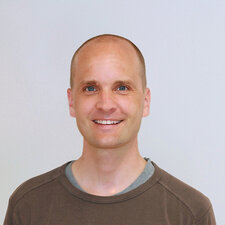
Dipl.-Geogr. Jan Springorum
Research Officer – Institute for Applied Research (IAF)
T. +49 7472/951-210
F. +49 7472/951-200
M.jan.springorum@hs-rottenburg.deRoom: 111, West Wing
Substitute
Prof. Dr. Stefanie Steinebach
Professor of Communication and Education for Sustainable Development
T. +49 7472/951-258
F. +49 7472/951-200
M.steinebach@hs-rottenburg.deRoom: 126, South Wing

B.Sc. Markus Weber
Academic Assistant – GIS-Laboratory
T. +49 7472/951-154
F. +49 7472/951-200
M.weber@hs-rottenburg.deRoom: 6.12, Kienzle Building
Legal regulation:
Task:
The university appoints a contact person for its members and staff for issues relating to sexual harassment. Without prejudice to the responsibility of university bodies and committees, they work to ensure that members and affiliates of the university are protected from sexual harassment.
Contact persons for doctoral candidates at the HFR
Prof. Dr. habil. Heidi Elisabeth Megerle
Professor of Applied Geography and Planning
Head of BSc Water Resource Management degree programmeT. +49 7472/951-243
F. +49 7472/951-200
M.megerle@hs-rottenburg.deRoom: 210, Baroque building
Office hours: At any time by appointment (telephone, e-mail)
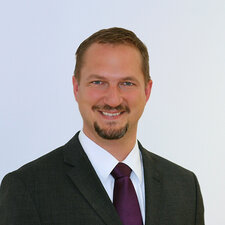
Prof. Dr. Artur Petkau
Professor of Forest Resources Economics and Forest Management; Head of the BSc Forest Management programme
T. +49 7472/951-281
F. +49 7472/951-200
M.petkau@hs-rottenburg.deRoom: 124, South Wing
Consultation hours: By arrangement
Substitution
Prof. Dr. rer.nat. Martin Brunotte
Professorship for Renewable Energies and Energy Planning
T. +49 7472/951-149
F. +49 7472/951-200
M.brunotte@hs-rottenburg.deRoom: 6.11, Kienzle Building
Legal regulation:
Task:
The doctoral regulations regulate the further admission requirements, the implementation of the doctoral procedure, the involvement of external doctoral candidates and the appointment of ombudspersons.
Responsible for the strategic development and support of digitalisation
Prof. Dr. rer. pol. Tobias Veith
Professorship for Energy Economics
T. +49 7472/951-144
F. +49 7472/951-200
M.veith@hs-rottenburg.deRoom: 6.08, Kienzle Building
Task:
The Digitalisation Officer is responsible for advancing the university's digitalisation strategy in close collaboration with central stakeholders. They coordinate with digitalisation officers from other universities and regularly participate in training events to keep colleagues informed and supported regarding current digital developments.